
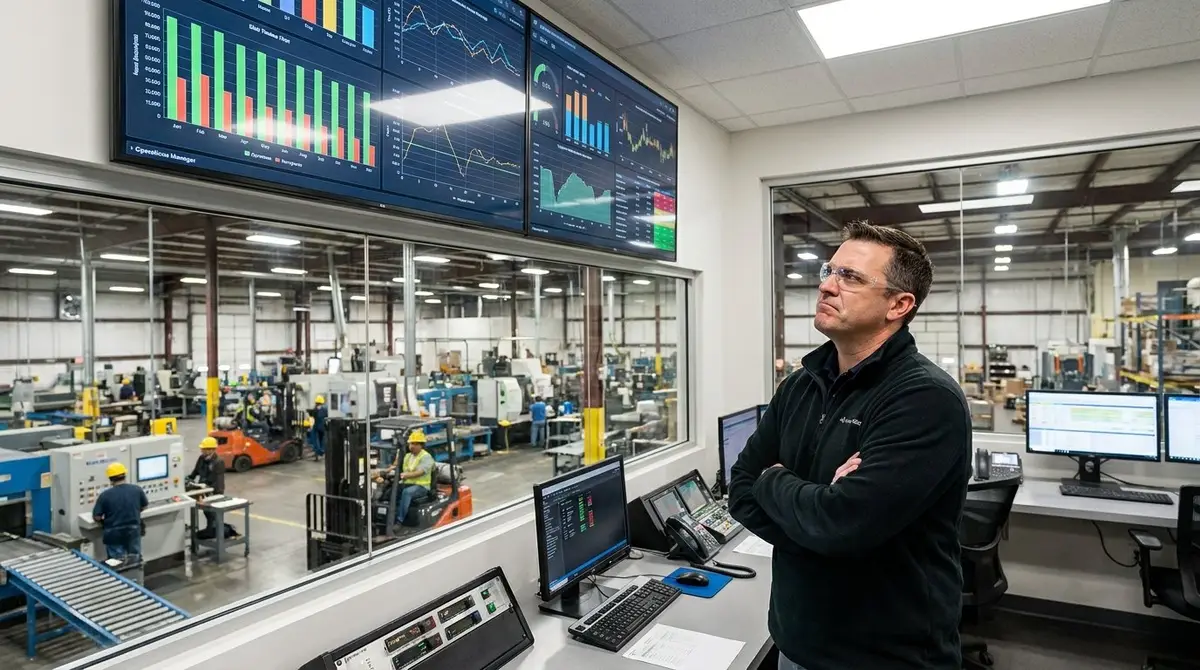
The Dashboard Paradox
Walk into any modern manufacturing facility and you'll likely see it: a large monitor mounted in the office or break room, cycling through colorful charts, real-time production metrics, efficiency percentages, and order status widgets. The command center dashboard has become the status symbol of the data-driven factory.
But here's the uncomfortable truth most operations managers discover six months after implementation: the dashboard looks impressive, updates every few seconds, and tells you almost nothing useful about what's actually happening on the shop floor.
The problem isn't the dashboard technology. It's that aggregation without source integrity creates a beautiful illusion of visibility while masking the same blind spots that existed before. You've built a real-time window into incomplete, inconsistent, or outdated information.
Where Dashboard Data Actually Comes From
Most manufacturing dashboards pull from multiple disconnected sources: an ERP system that was last updated this morning, a spreadsheet someone emails at shift change, manual counts entered into a tablet app, and maybe some machine sensor data if you're lucky. Each source operates on its own timeline, with its own accuracy threshold, and its own definition of what constitutes a